In a stunning pivot that could redraw naval power lines across Asia, President Donald Trump announced Thursday that the U.S. will hand over its crown-jewel nuclear propulsion secrets to South Korea, greenlighting the ally’s first nuclear-powered submarine. The bombshell, dropped on Truth Social after Trump’s whirlwind South Korea visit, dangles Philly Shipyard as the build site—courtesy of Seoul’s Hanwha Group buyout—and ties into a fresh $350 billion trade pact. But as North Korea flaunts its own sub dreams and China looms large, is this a bold deterrence boost or a nonproliferation nightmare?
From Handshake to Handover: The Deal’s Nuts and Bolts
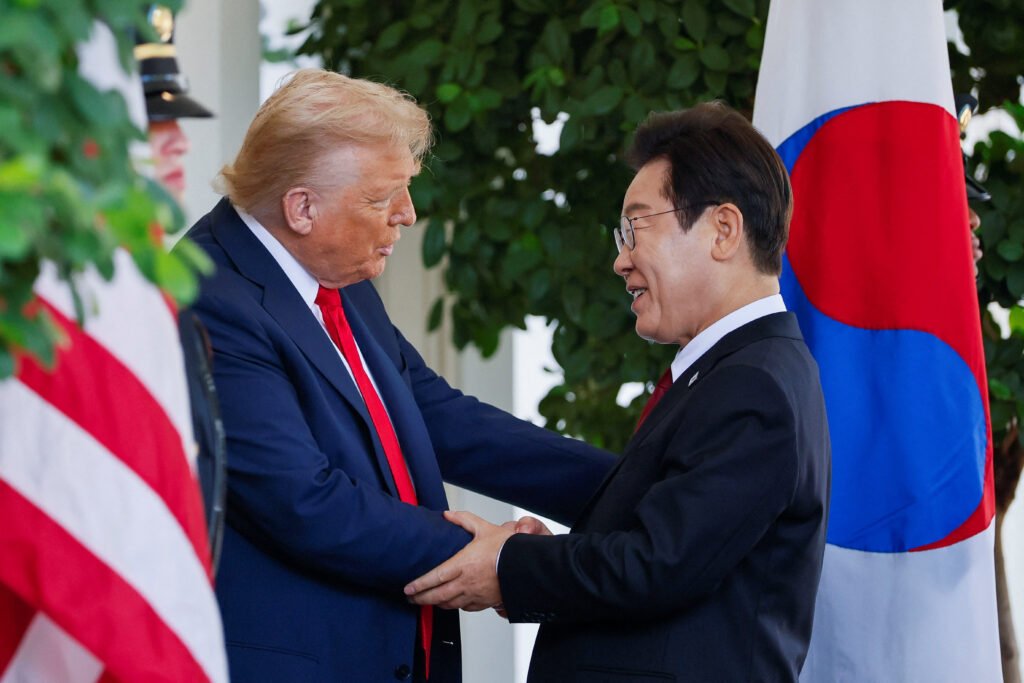
Trump’s trip kicked off with pomp at Gyeongju’s National Museum: a gold Silla crown and the Grand Order of Mugunghwa from President Lee Jae-myung, capping bilateral bonhomie. Over dinner, Lee pitched modernization—hiking Seoul’s defense tab to ease U.S. loads—while clarifying an August “misunderstanding”: No nukes, just nuclear fuel for subs to shadow foes without surfacing every few days like diesel clunkers.
Trump’s reply? A social media mic drop: “South Korea will build its Nuclear Powered Submarine in Philly—making American shipbuilding GREAT again!” The sweetener: Korean Air’s $36.2 billion Boeing spree (103 jets, 135,000 U.S. jobs) and $2.3 billion in ROKAF tech upgrades. Size, cost? TBD, but Seoul’s eyeing conventional arms on a hull that could prowl indefinitely, slashing America’s regional babysitting.
This isn’t casual sharing. U.S. nuclear sub know-how—guarded fiercer than Fort Knox—has trickled only to Britain (1950s). Even AUKUS (U.S.-UK-Australia) skirts direct transfers, funneling Aussie hulls through British yards. Pentagon brass went radio silent on queries, but Hanwha Ocean’s all-in: “Ready to fuse advanced tech with both nations.”
Pacific Powder Keg: NK, China, and the Ripple Effect
Timing? Razor-sharp. Trump’s en route to Xi Jinping huddle, where Beijing’s sub fleet eyes Taiwan and the South China Sea. Meanwhile, Pyongyang—fresh off Wednesday cruise-missile flexes—paraded its maiden nuclear sub in March, a stealthy stab at Seoul and Yankee carriers. Lee’s vision: ROK subs as U.S. force multipliers, tracking Kim’s ghosts without the diesel handicap.
X is ablaze: “Verge of a Pacific arms race?” one analyst frets, while another hails it as “deterrence done right.” Arms watchers like Arms Control Association’s Kelsey Davenport warn of IAEA headaches—highly enriched uranium demands ironclad safeguards under NPT. “Unnecessary for defense, risky for proliferation,” she cautions.
Back home, U.S. yards like Huntington Ingalls groan under Virginia-class delays (2–3 years); Columbia-class, worse. Trump’s Philly play? A shipbuilding revival, or overload?
Alliance 2.0: Burden-Share or Power Play?
Lee’s modernization mantra resonates with Trump’s “allies pay up” ethos—Seoul’s $150 billion U.S. shipyard pledge sweetens the pot. But critics spy echoes of AUKUS envy: Why Seoul now, when Australia’s waited years? And with NK’s subs lurking, does this tip the scales—or tempt a regional nuke sprint?
As Trump jets to Beijing, one truth surfaces: In the shadow of Kim’s missiles, yesterday’s taboo is tomorrow’s toolkit. The deep blue just got deeper—and more crowded.
Source: Apnews.com
Read also – “China Cracks Down on Underground Church, Detains Dozens of Pastors”
Listen to a message from God for you on our YouTube channel.